A custom AI system can become part of daily operations long before it becomes part of your balance sheet. Your teams rely on its model, prompts, agents, integrations and support team, but who controls those pieces if the vendor is acquired, shuts down or changes direction?
That question is no longer hypothetical. The recent NVIDIA–Hugging Face agreement is a high-profile reminder that AI infrastructure companies can become strategic acquisition targets. And it is not the only signal: acquisitions can also reshape what customers can use, who can access it and which products remain supported.
For enterprise leaders, the issue is not whether consolidation is inherently good or bad. It is whether your AI investment can keep working when the vendor behind it changes.
The warning shot: acquisition can change the product you depend on
On September 3, 2026, NVIDIA announced an agreement to acquire Hugging Face for approximately $12.93 billion. As of October 9, the deal has not closed; NVIDIA said closing is expected in the first half of 2027, subject to regulatory approvals and other conditions. NVIDIA has also said Hugging Face will remain an open platform and continue supporting different models, clouds and hardware providers. Those commitments matter, but the transaction still shows how valuable AI platforms have become to larger technology companies. (NVIDIA’s announcement; SEC filing)
A more immediate example is Anthropic’s May 2026 acquisition of Stainless, a developer-tools company whose technology generated software development kits used across the industry. Anthropic said the team would help advance its platform. TechCrunch reported that the acquisition would also mean Stainless was winding down its hosted products, including its SDK generator; customers retained rights to modify SDKs they had already generated. (Anthropic’s announcement; TechCrunch’s report)
The lesson is not that an acquisition automatically breaks a customer’s system. It is that a vendor’s priorities, ownership and product scope can change, and a working contract or integration does not guarantee the service will continue in its current form.
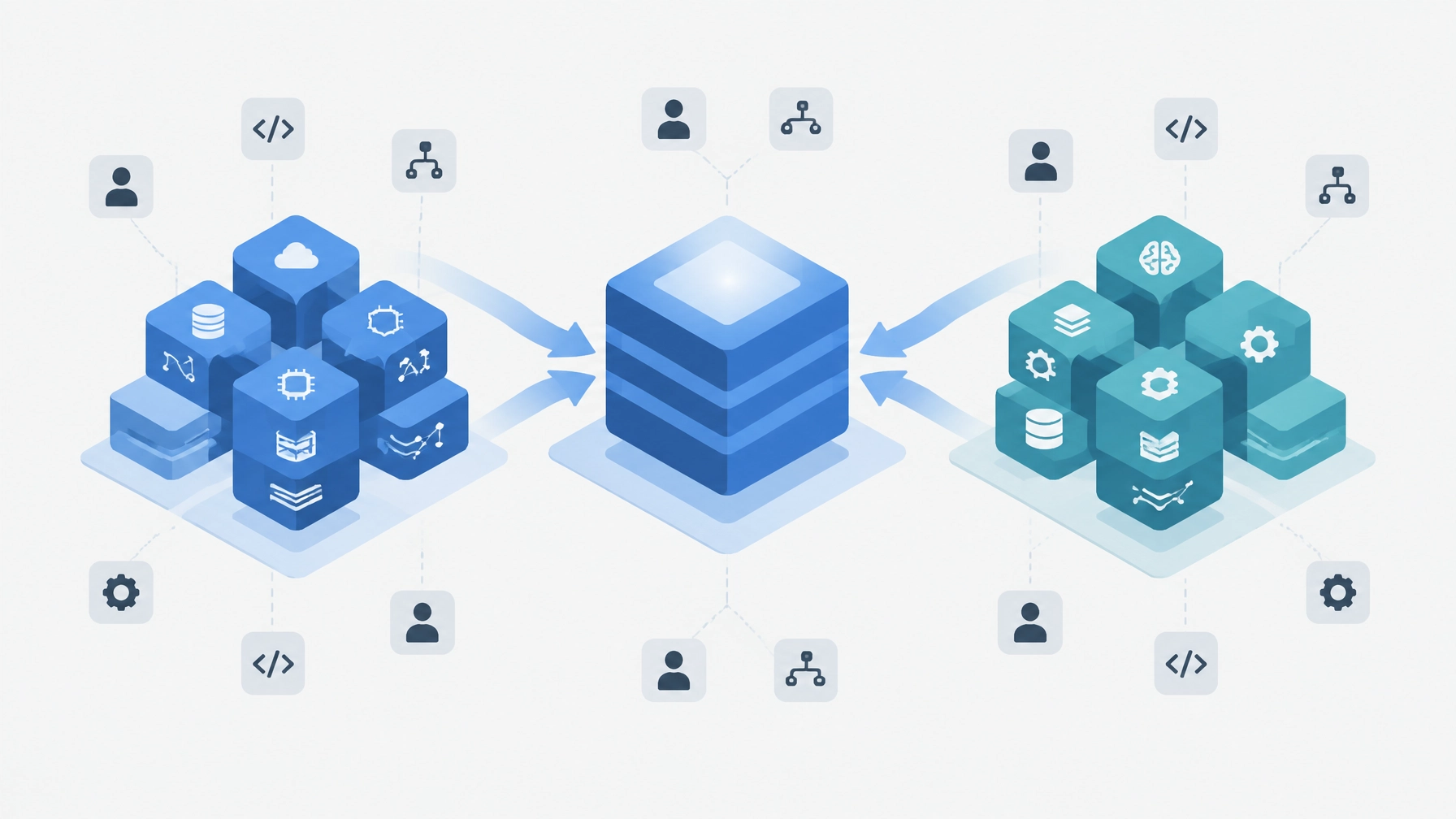
What can change when your AI vendor changes hands?
The roadmap can reset. The acquiring company may prioritize integration with its own products, focus on a different customer segment or redirect engineering investment. Features your team expected may be delayed or dropped.
Pricing and packaging can shift. A service previously sold independently may be bundled, repriced or moved into a different support tier. Even if your agreement holds temporarily, renewal terms may change your economics.
APIs and models may be deprecated. A new owner can consolidate overlapping services, replace model versions or change access requirements. If your application depends on a particular endpoint or response format, even a “better” replacement may require retesting and engineering work.
The people who understand your system may leave. Custom AI is more than a model call. It often includes domain-specific data preparation, prompt logic, evaluation, guardrails and integrations built through close collaboration. If the engineers who know why those choices were made depart, a handoff document may not be enough.
Your contract may not give you a clean exit. Check whether the vendor can assign the agreement without consent, whether a change of control counts as assignment, and what rights you have if the buyer is unacceptable or the service is discontinued. Also clarify who owns customer data, prompts, fine-tuning artifacts, outputs and customer-specific improvements.
“Your model” may not mean you own the weights. A custom deployment could use a third-party foundation model with vendor-hosted fine-tuning, adapters or configuration. The weights might sit in the vendor’s cloud, under a third party’s license, or be unavailable for export. Ownership, usage rights and physical location are separate questions; the contract and architecture should answer each one.
A practical resilience checklist for enterprise buyers
Before an acquisition forces the issue, map your critical AI workflows and verify what you can actually take with you.
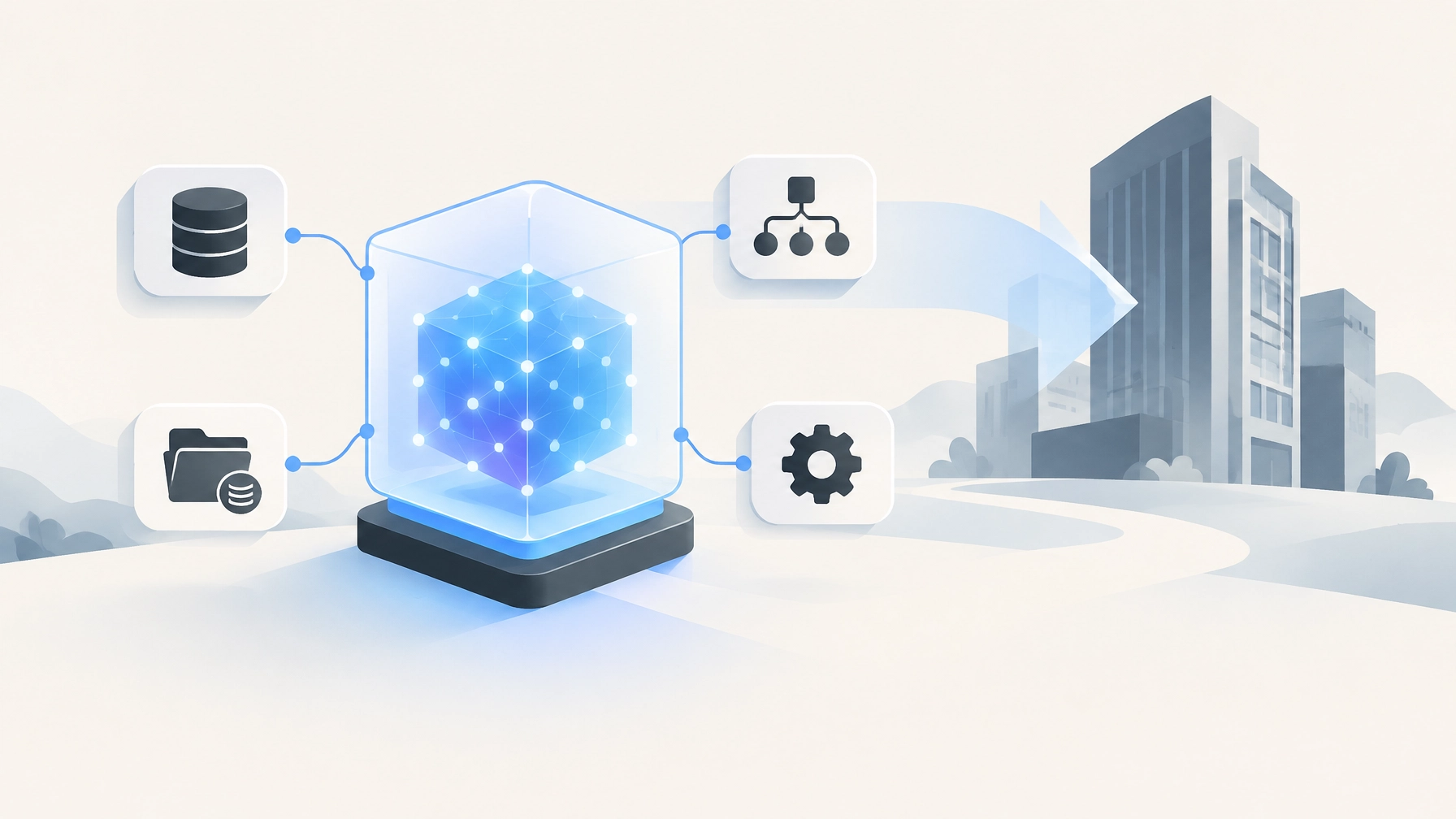
- Inventory the assets. List model versions, weights or adapters, prompts, system instructions, agent configurations, retrieval indexes, fine-tuning data, evaluation sets, logs, source code, API dependencies and deployment scripts. Name the party that owns or controls each item.
- Secure export rights, and test them. Require a usable, machine-readable export of your data and customer-specific artifacts. Ask the vendor to demonstrate the export, identify anything it cannot provide and explain any third-party restrictions. A portability promise that has never been tested is only a promise.
- Own weights where feasible; preserve alternatives where not. If the model license permits it, keep customer-specific weights or adapters in an environment you control. If it does not, preserve the assets that help recreate and validate the behavior elsewhere: training data, prompts, configuration, evaluation materials and documentation.
- Keep prompts and pipelines portable. Store prompts, workflow logic, schemas and integration code in your own version-control system. Avoid making business-critical behavior depend entirely on a proprietary control plane or an undocumented vendor feature.
- Separate your data from the vendor’s runtime. Where practical, keep source data, permissions and system-of-record connections in infrastructure you control. Make the runtime replaceable, and ensure the architecture does not require copying sensitive business data into a new vendor environment just to switch providers.
- Negotiate for continuity. Ask for advance notice of a change of control, clear successor obligations, and a termination right if the new owner or material change creates unacceptable risk. For critical systems, negotiate service levels, model and API deprecation notice, transition assistance, export rights and reasonable fees. Consider escrow for customer-specific code or deployment artifacts where it would provide a viable recovery path.
- Keep ownership of the evaluation set. Maintain representative test cases and success criteria internally. If the model changes or you migrate to another provider, your team needs an independent way to check accuracy, safety, latency and business performance, not just the vendor’s assurance that the replacement is equivalent.
- Document how the system works. Keep architecture diagrams, model and license details, data flows, prompts, integration dependencies, deployment instructions and named internal owners current. Documentation is especially valuable when the people who built the system are no longer available.
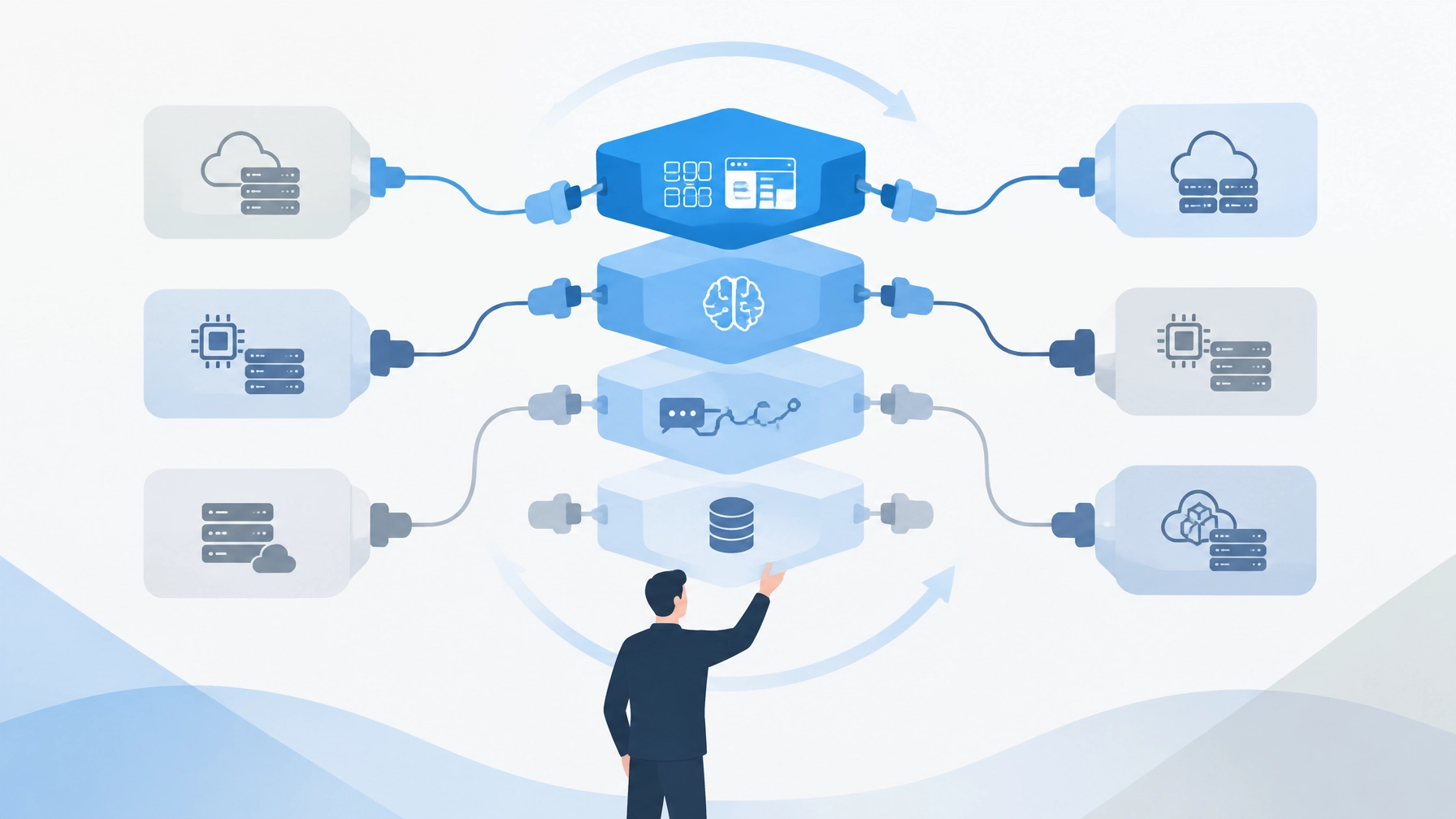
Consider a hypothetical regional enterprise in the Denver market midway through migrating a document-review workflow. Its AI partner is acquired just as the old system is being retired. If the company controls its data, evaluation set and integration code, and has export rights plus a documented fallback, it can assess whether to continue with the buyer, shift runtimes or pause the migration. Without those safeguards, even figuring out what needs to move may take weeks.
Own the system that makes the model useful
“Own your stack” does not mean every company should train a foundation model or host every component. It means your business-critical capability should not be inseparable from a vendor’s changing product roadmap.
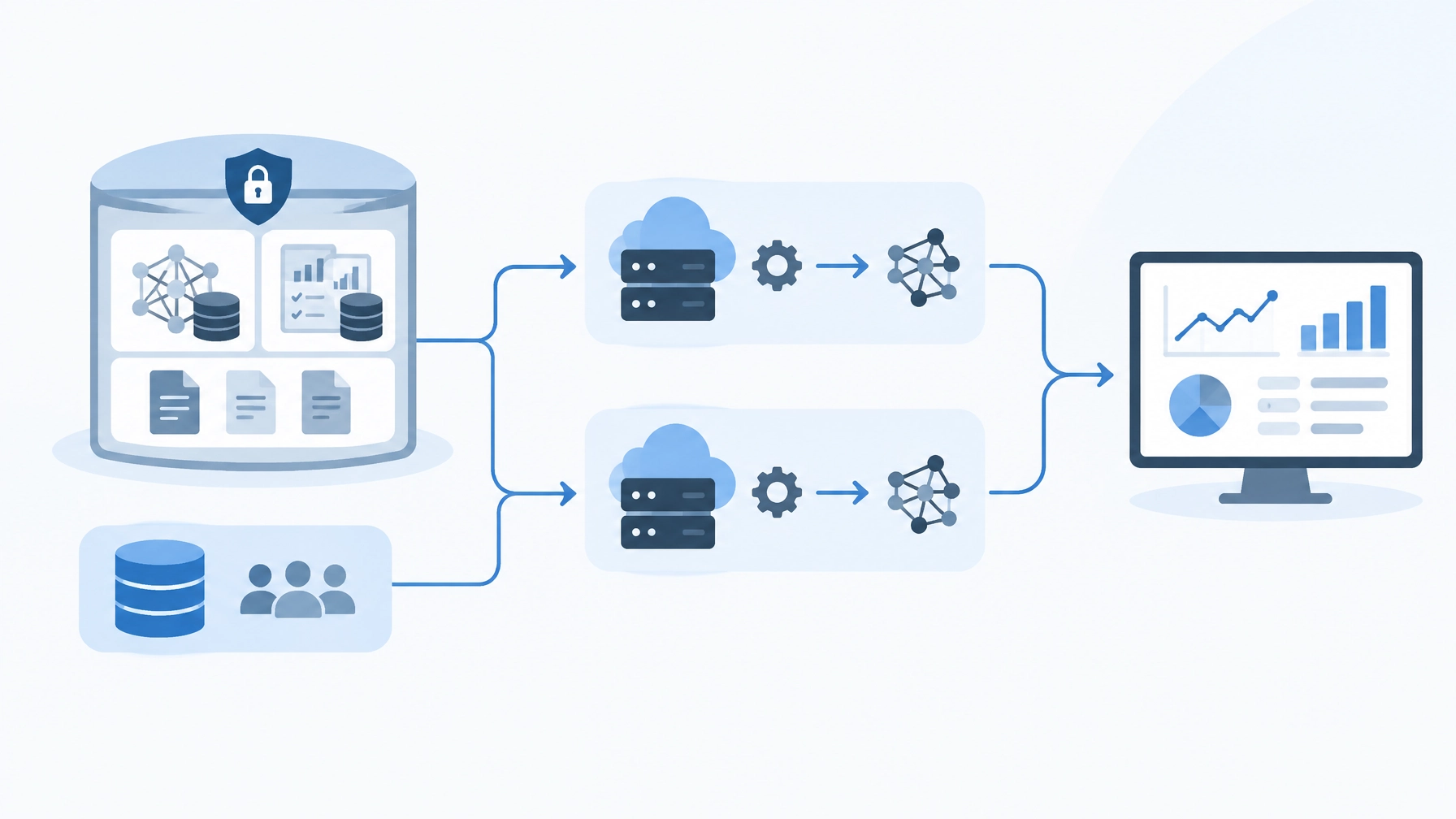
A thoughtful custom AI implementation can keep your data, workflows, prompts, evaluation criteria and integrations under your control, while using third-party models or infrastructure where they make sense. That separation makes it easier to adapt as models improve, providers consolidate or commercial terms change.
This is where a development partner can make a difference. The goal is not simply to deliver a model that works today; it is to build and implement a system that fits your operations, can be evaluated against real outcomes and has a supportable path forward. That means designing for portability, documenting decisions, clarifying ownership and planning for deployment, not treating those as last-minute contract details.
For CTOs, Heads of Innovation and Operations Directors, vendor resilience belongs in the architecture review and the procurement conversation. Ask not just “Will it work?” but “What would it take to keep it working if this vendor disappeared tomorrow?”
Newaiv works with businesses to build and implement custom AI solutions around real operational needs. If you’re planning a deployment or reviewing an existing system, talk with Newaiv about building an AI stack you can adapt and manage.