On September 3, 2026, Nvidia confirmed it will acquire Hugging Face for $12.93 billion. The confirmation followed a week of reporting that began on August 27, when CNBC, citing The Information, said the two companies had agreed to a deal.
It is now official, and the strategic signal is worth reading carefully.
Nvidia is gaining control of one of the most important platforms in the open-model ecosystem. Hugging Face is where developers and companies discover, test, share, and deploy machine-learning models, datasets, and applications. Nvidia, meanwhile, has spent years expanding from GPUs into networking, AI software, model-serving tools, and enterprise infrastructure.
Both companies have been explicit that the platform will stay open. Nvidia CEO Jensen Huang said Hugging Face “will remain an open platform for the entire AI ecosystem,” adding that “developers will choose the models they want, the frameworks they want, the clouds and inference service providers they want and the computing platforms they want.” Hugging Face CEO Clem Delangue framed the deal as a resourcing decision: the platform “needs more compute, more support, more collaboration, and more visibility. That’s why we went to talk to Jensen, who offered to do exactly that with us.”
Those commitments matter. So does the underlying direction of travel: the AI stack is consolidating vertically, from chips and data centers to models, developer tools, and business applications.
For enterprise leaders in Denver and beyond, the question is not who owns Hugging Face. The more important question is this:
Are you building an AI strategy that can adapt as the technology stack consolidates around a few powerful platforms?
What Nvidia is buying
Hugging Face describes itself as a community platform for collaborating on models, datasets, and applications. Its public hub hosts roughly 3 million models and serves more than 18 million developers, while its enterprise services include access controls, audit logs, private datasets, and dedicated support. The company was founded in 2016 and had raised about $395 million before the acquisition.
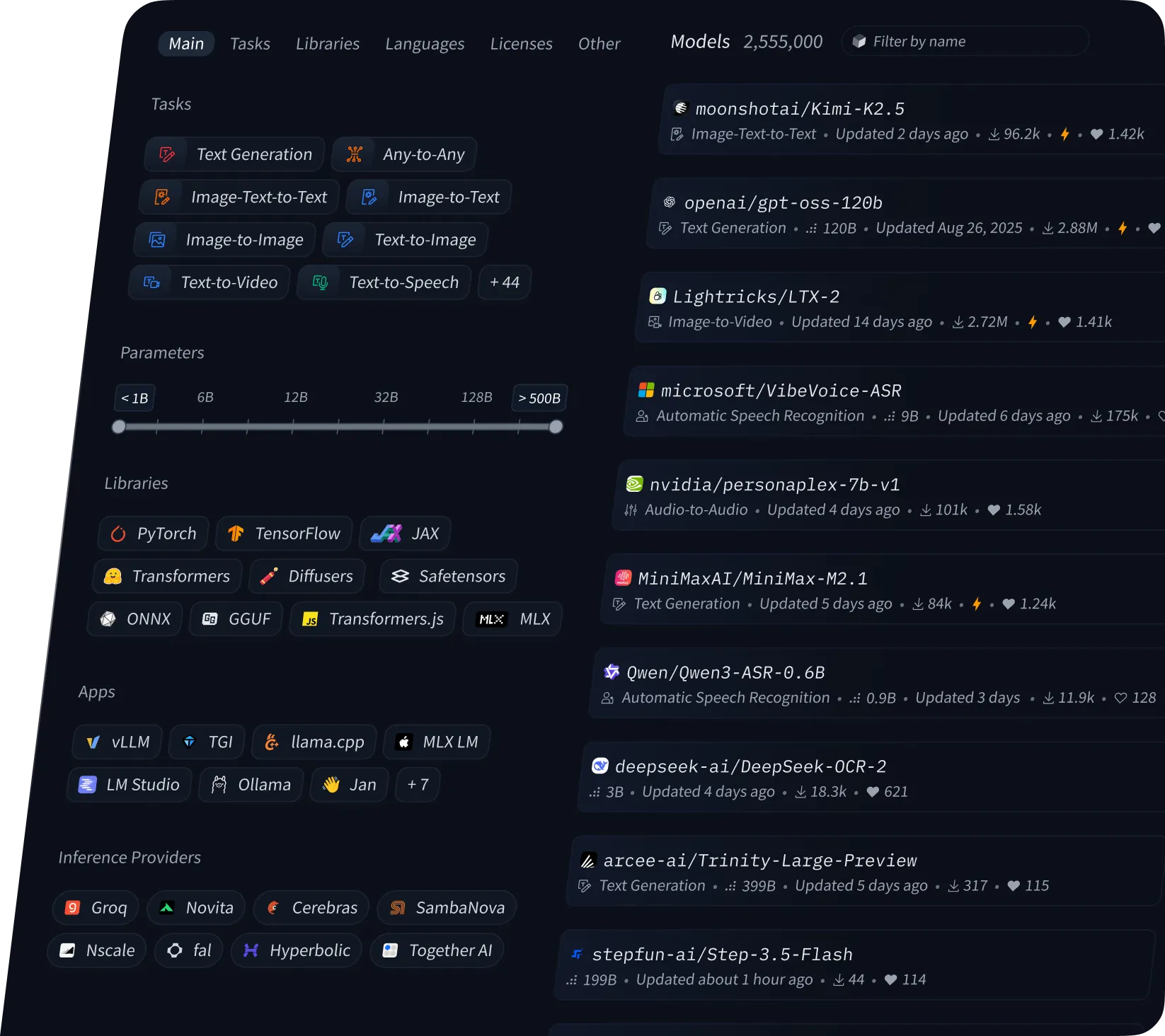
That makes Hugging Face more than a model library. It is a developer touchpoint and an increasingly important part of the path from experimentation to production.
Nvidia already provides much of the infrastructure required to run AI at scale. Its enterprise AI offerings span accelerated computing, model deployment, inference optimization, AI development frameworks, and reference architectures for agentic applications.
Hugging Face gives Nvidia a much stronger position at the layer where organizations choose models and begin building applications.
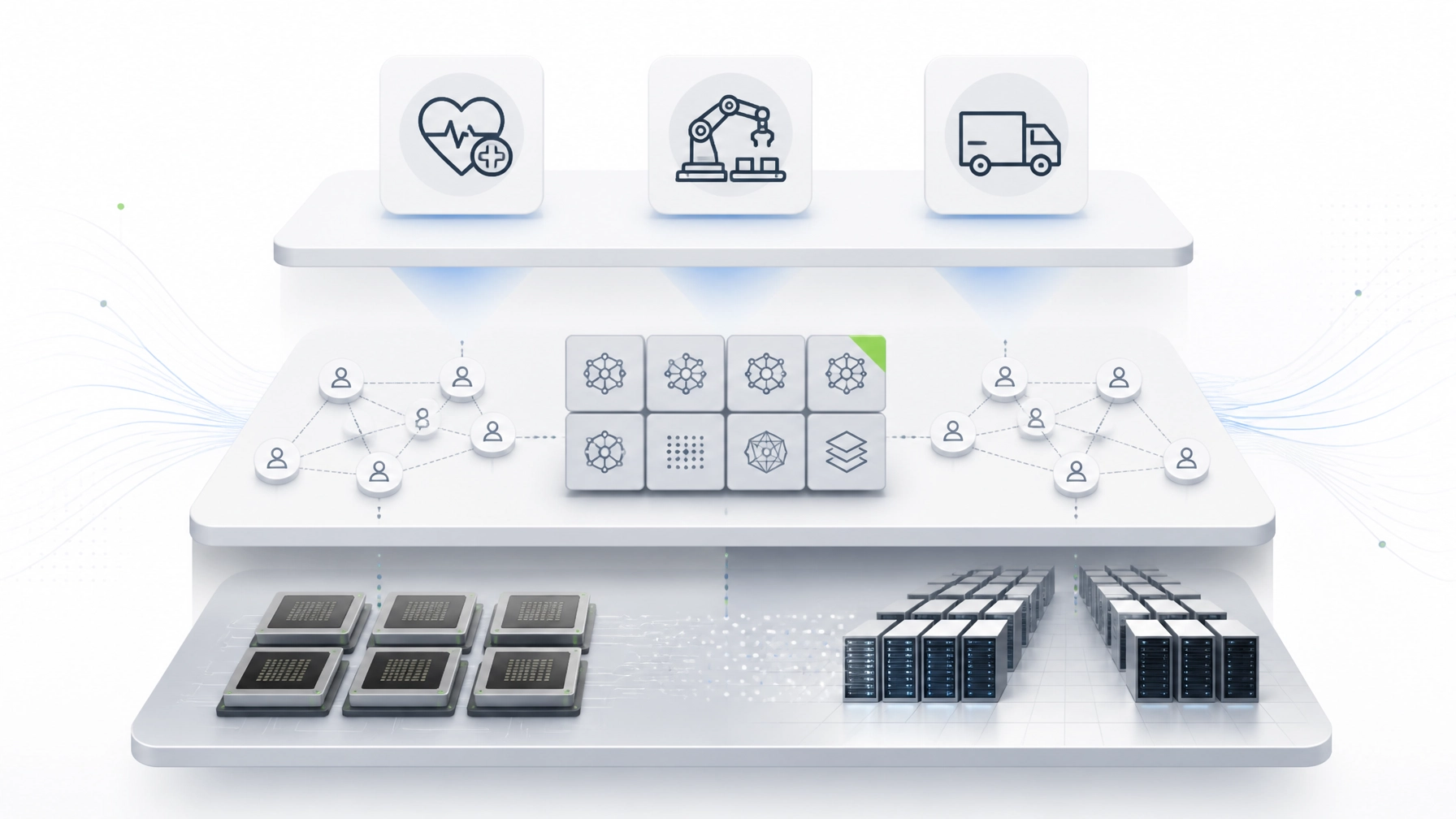
In practical terms, Nvidia can now connect:
- Compute : GPUs, networking, and data-center infrastructure
- Development tools : frameworks, libraries, and deployment services
- Models : open-weight and proprietary foundation models
- Enterprise data : private company information and operational systems
- Applications : AI agents and workflow automation
That is a much broader position than selling hardware alone.
The AI stack is becoming vertically integrated
The era of treating AI infrastructure as a collection of unrelated components is ending.
The largest technology companies increasingly want to control multiple layers of the stack. Cloud providers are building their own chips. Model providers are developing specialized infrastructure. Hardware companies are investing in software and developer ecosystems. Application companies are embedding models directly into business processes.
The Hugging Face acquisition fits that pattern.
The strategic logic is straightforward:
- The company that controls the chips influences performance and cost.
- The company that controls the deployment tools influences how models run.
- The company that controls the model ecosystem influences what developers evaluate and adopt.
- The company that reaches enterprise applications influences where business value is created.
That does not mean every customer will be forced into one Nvidia-only environment, and Nvidia has said the opposite. Enterprises will continue to use multiple clouds, model providers, and deployment patterns.
But platform ownership can still shape the default path. If Hugging Face tools become more tightly optimized for Nvidia infrastructure, organizations may find it easier to select, tune, and deploy models on Nvidia-powered environments than elsewhere.
For a hospital system evaluating clinical documentation tools, a manufacturer building predictive maintenance workflows, or a logistics company optimizing warehouse operations, these infrastructure decisions eventually show up as:
- Inference cost
- Response time
- Data residency
- Vendor dependence
- Integration effort
- Security and compliance workload
- Ability to change models later
The stack is becoming more convenient: and potentially more concentrated.
Open-source versus closed models: the decision is getting more nuanced
One of the most important signals in this transaction is Nvidia’s willingness to invest heavily in both open and closed-model strategies.
For years, enterprise leaders have often treated the choice as binary:
- Use a proprietary model through an API.
- Or operate an open model yourself.
That distinction is becoming less useful.
Open-weight models can offer more control over deployment, customization, cost, and data handling. They may be attractive for organizations that need to run models in private cloud or on-premises environments, especially when sensitive data cannot be sent to a third-party API.
Closed models may offer stronger performance for certain tasks, simpler operations, and faster access to new capabilities. They can also reduce the burden on internal teams that do not want to manage model infrastructure.
The right choice depends on the workload.
A Denver healthcare organization may use a closed model for a general administrative assistant while keeping clinical summarization within a controlled environment using a customized open model. A manufacturer may use one model for maintenance reports and another for real-time inspection. A logistics operator may combine a language model with traditional optimization software, rules engines, and forecasting models.
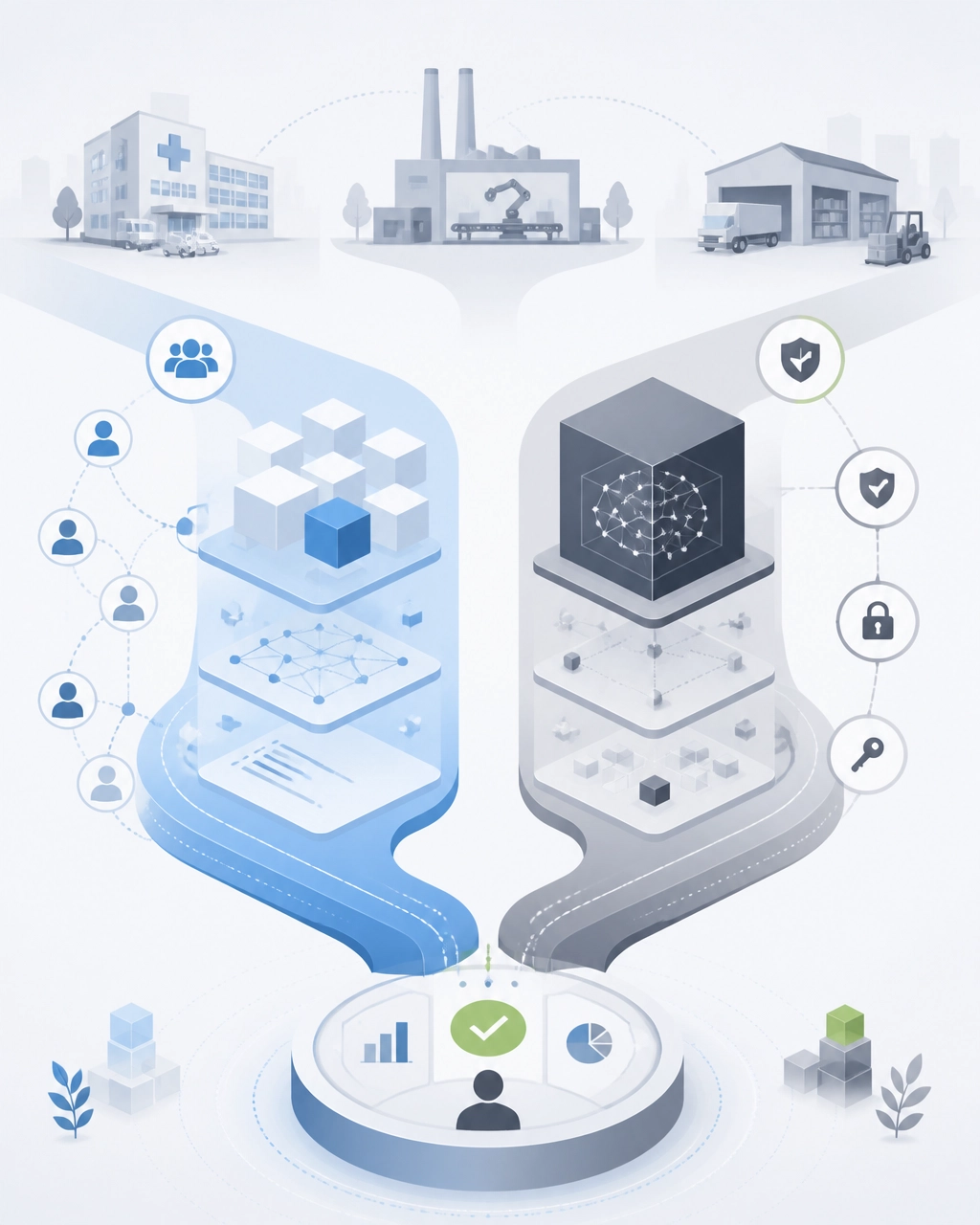
The takeaway is not that open models will replace closed models, or vice versa. The takeaway is that enterprise AI architecture needs model optionality.
Organizations should be able to compare models against their actual requirements instead of committing to a single provider before they understand the use case.
What this means for companies building custom AI
For businesses, the acquisition is not a reason to immediately standardize on Hugging Face or Nvidia.
It is a reason to invest in the layer that matters most: your own business context.
Foundation models are becoming easier to access. Infrastructure is becoming more standardized. Development platforms are improving quickly.
Your competitive advantage will not come from simply having access to a model. It will come from how well your AI system understands and acts on:
- Internal documents and policies
- Operational data
- Customer and patient workflows
- Equipment and sensor information
- Compliance requirements
- Existing ERP, EHR, CRM, and warehouse systems
- Human approval processes
This is where bespoke AI development becomes important.
A custom AI solution may use a model hosted through a third-party API, an open-weight model deployed privately, or a combination of both. The model is only one component. The larger system includes retrieval, data pipelines, permissions, workflow orchestration, monitoring, evaluation, and integrations.
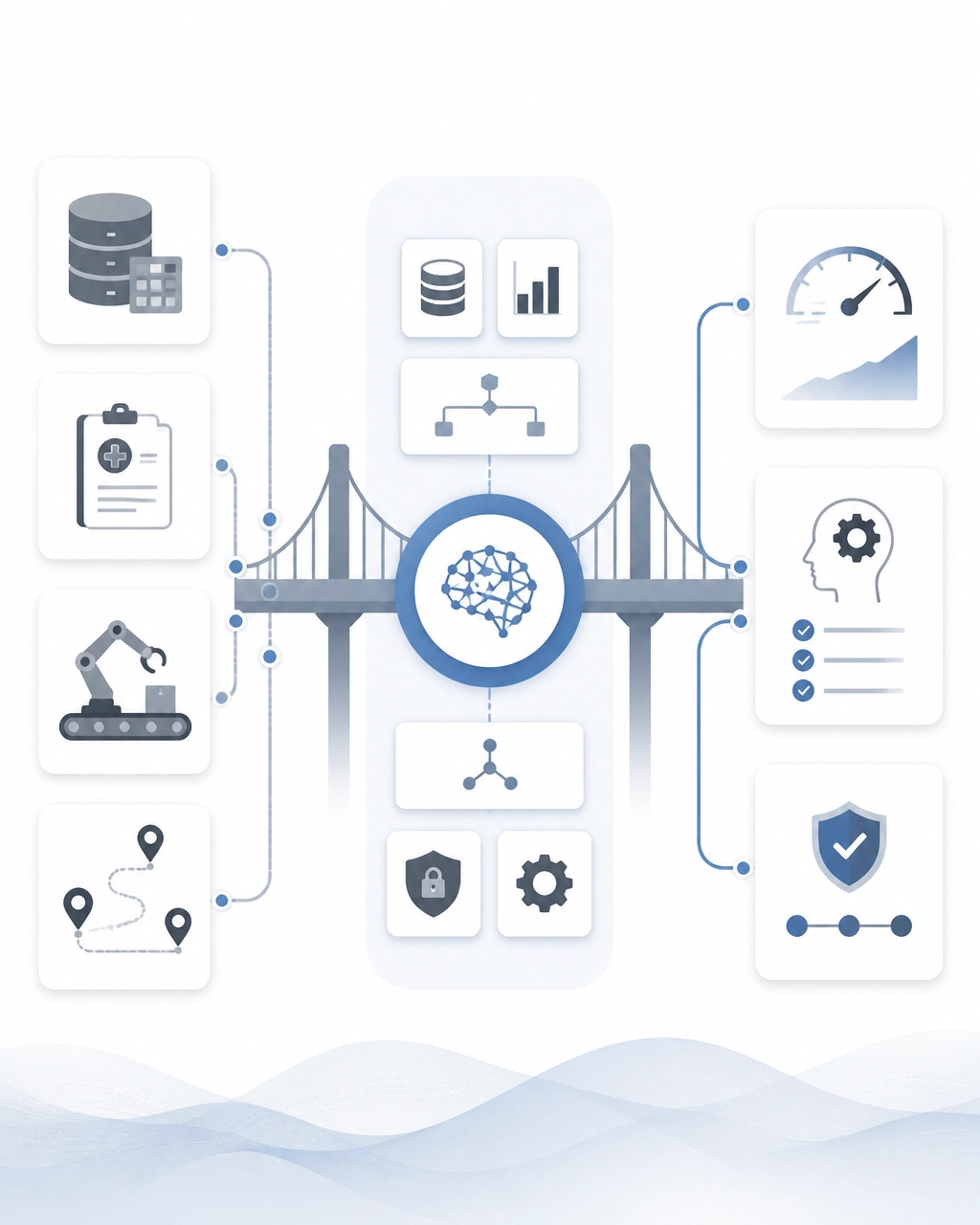
For example, a manufacturer could build an AI maintenance assistant that:
- Retrieves information from equipment manuals and service records
- Connects to the ERP system for parts and work-order data
- Reviews sensor readings from production equipment
- Recommends a maintenance action
- Routes the recommendation to a technician for approval
- Records the final decision for audit and continuous improvement
That is not a chatbot project. It is a business system.
Similarly, a healthcare organization may need an AI workflow that extracts information from unstructured documents, checks it against internal policy, presents a recommendation to staff, and writes approved information back into existing systems. The value comes from the complete workflow: not from the model in isolation.
Four questions enterprise leaders should ask now
1. Can we change models without rebuilding the application?
Avoid designing critical workflows around a single model provider’s unique behavior. Use clear interfaces, evaluation benchmarks, and modular components wherever practical.
2. Which workloads require private deployment?
Classify data and workflows by sensitivity. Some applications may be appropriate for managed APIs. Others may require private cloud, on-premises infrastructure, or strict regional controls.
3. Where does human judgment remain essential?
In healthcare, manufacturing quality, financial operations, and logistics, AI should not quietly make irreversible decisions. Build approval gates, escalation paths, and transparent audit trails into the workflow from the beginning.
4. How will we measure business impact?
Track outcomes such as time saved, fewer errors, faster case resolution, improved equipment uptime, reduced administrative work, and better service levels. Model benchmarks alone do not prove return on investment.
Governance matters more as platforms consolidate
A vertically integrated AI stack can simplify procurement and deployment. It can also introduce concentration risk.
If one vendor becomes central to your compute, model discovery, tooling, and deployment process, switching may become more difficult. Enterprise buyers should review:
- Portability of models and data
- Licensing and usage restrictions
- Access to logs and evaluation results
- Support for multiple deployment environments
- Security incident procedures
- Pricing changes and capacity commitments
- Ownership and control of fine-tuned models
- Open-source project governance
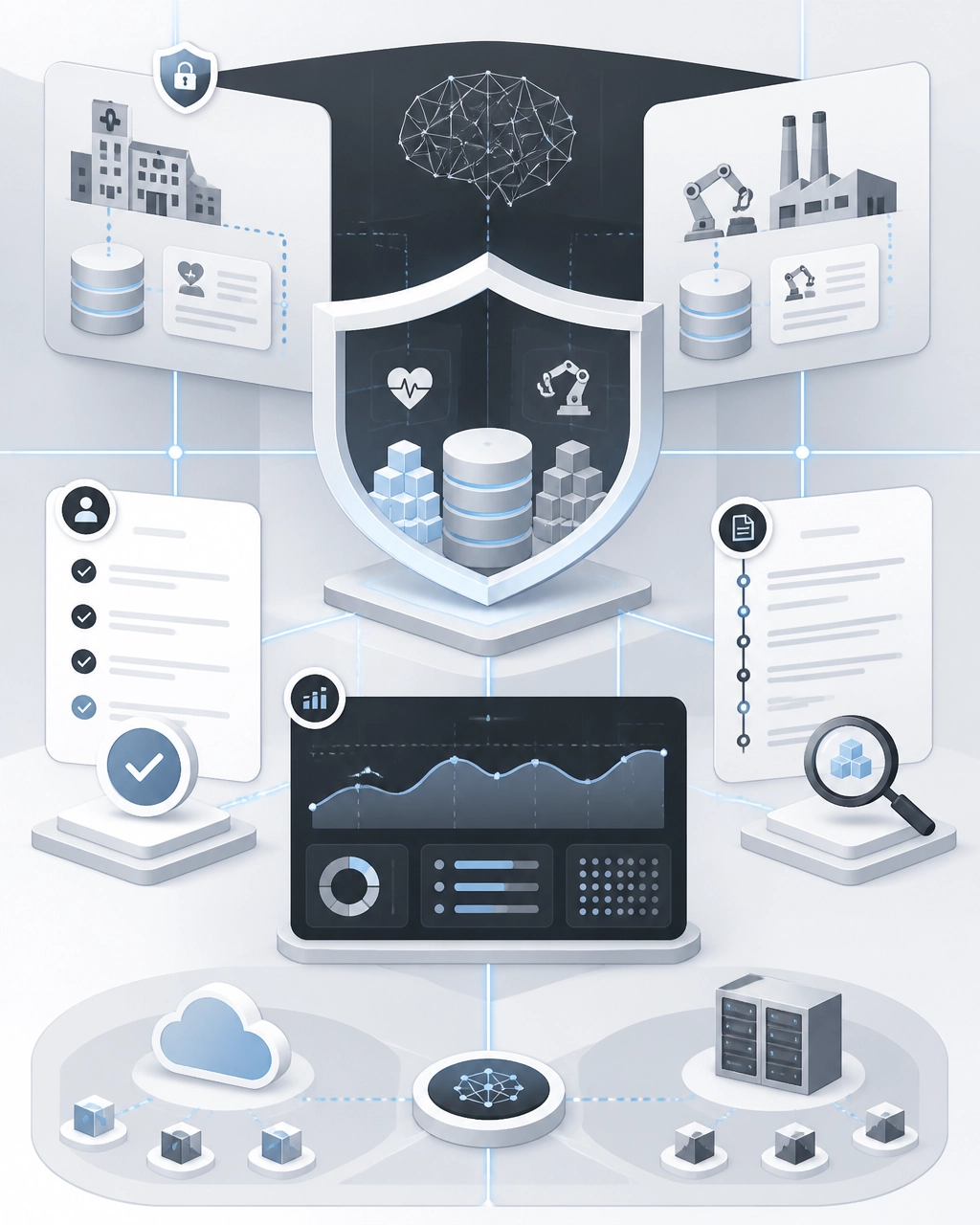
These are not theoretical concerns. Hugging Face disclosed a security incident in July 2026 that drew industry-wide attention to the security of fast-moving AI platforms and the agents operating on them. Any enterprise adopting model hubs or open-source components needs a software supply-chain process that includes provenance checks, vulnerability scanning, access controls, and ongoing monitoring.
The Newaiv perspective: focus on the business system
The Nvidia-Hugging Face deal is another reminder that AI infrastructure is moving quickly. The companies and platforms available today may look different a year from now.
That should not stop your AI program. It should change how you build it.
Start with a measurable operational problem. Map the data and systems involved. Decide what must remain private. Compare open and closed models against the actual workflow. Build an evaluation process before deployment. Then implement the smallest useful system that can prove value and scale safely.
At Newaiv, we help businesses move from AI interest to working systems. Our approach is built around deep customization, real-world business impact, and end-to-end support: from identifying the opportunity through deployment and ongoing improvement.
Whether you are modernizing healthcare operations, improving manufacturing efficiency, or coordinating complex logistics workflows, the goal is not to follow every acquisition headline.
The goal is to build an AI capability that works with your data, your systems, and your people: while preserving the flexibility to adapt as the AI stack changes.
Explore how Newaiv can support your AI initiative.
Sources and further reading
- CNBC: Hugging Face approached Nvidia’s Huang weeks ahead of $12.9B acquisition, CEO tells CNBC
- TechCrunch: Nvidia confirms it will buy Hugging Face for $12.9 billion
- CNBC: Nvidia agrees to buy Hugging Face for $12.9 billion, report says (August 27)
- Hugging Face: Security incident disclosure, July 2026
- Hugging Face: The AI community building the future
- Nvidia: Powering the next generation of AI agents